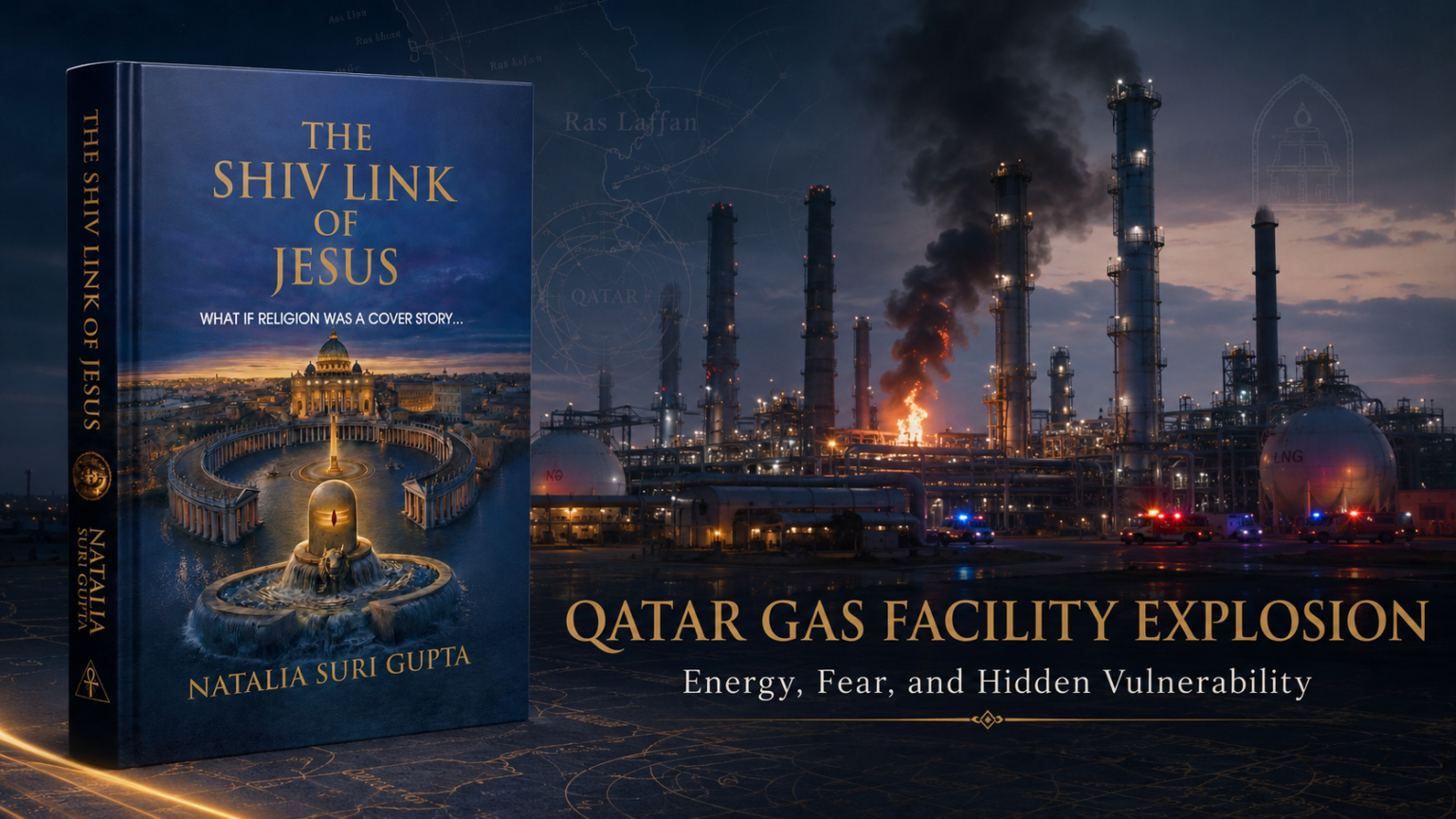
Introduction: Why the Qatar Gas Facility Explosion Is Trending
The Qatar gas facility explosion has become a major global news story because it did not happen in an ordinary industrial zone. It happened at Ras Laffan, one of the most important energy hubs in the world.
On Sunday, June 21, 2026, an explosion and fire occurred at the Barzan local gas supply facility in Ras Laffan Industrial City during the start-up of operations, according to QatarEnergy. Reuters reported that 54 people were injured and 18 were missing, while Qatar’s Interior Ministry described the incident as a “technical accident.”
That official phrase — technical accident — may sound simple. But the public reaction has been anything but simple.
People are searching because the explosion touches several fears at once: worker safety, energy security, geopolitical instability, and the vulnerability of the systems that quietly power modern life.
What Happened at the Qatar Gas Facility?
The blast occurred at the Barzan gas facility in Ras Laffan Industrial City. QatarEnergy said emergency teams were deployed and the fire was brought under control. Authorities said rescue teams were searching for the missing workers, and there was no public safety threat.
The Barzan facility is not just another plant. Reuters reports that it has a capacity of 1.4 billion cubic feet per day and supplies gas to local industries and Qatar’s power generation sector. It also produces ethane, condensate, liquefied petroleum gas, and sulphur.
That is why the story spread quickly. A fire at a gas facility is not only a local emergency. It becomes a symbol of how much the world depends on invisible networks: pipelines, terminals, workers, control rooms, pressure systems, shipping lanes, and political stability.
Why Ras Laffan Matters
Ras Laffan is central to Qatar’s energy identity. Reuters describes it as QatarEnergy’s primary site for LNG production and export, with a total production capacity of 77 million metric tons per year across 14 trains.
For many readers, LNG — liquefied natural gas — feels distant. But its impact is close. It helps power homes, industries, transport systems, and national economies. When something happens at a major LNG hub, people immediately wonder: Will gas prices rise? Will supply chains be affected? Is this connected to wider Middle East tensions?
Those questions explain the search trend. The explosion is not just a fire story. It is an energy story, a geopolitical story, and a human story.
Was the Qatar Gas Facility Explosion an Attack?
Based on the latest reliable reports, Qatari authorities described the June 21 explosion as a technical accident, not an attack. Reuters reported that the blast happened during start-up operations and that authorities said there was no threat to public safety.
This distinction matters. In a tense region, speculation spreads faster than verified information. The responsible reading is clear: until authorities release evidence of sabotage or attack, the confirmed framing remains a technical accident.
However, public anxiety is understandable because Ras Laffan has already been part of wider energy-security concerns. Reuters reported in March 2026 that Iranian aerial attacks caused extensive damage at Qatar’s Ras Laffan energy facilities during a broader regional escalation.
That background makes readers more sensitive to any new incident. Even when an event is officially called accidental, people remember the recent history of conflict and ask whether deeper risks are being hidden.
The Human Cost Behind the Energy Headlines
Energy stories often become numbers: capacity, exports, production, market share. But behind the Qatar gas facility explosion are workers, families, emergency responders, and missing people whose lives were disrupted in seconds.
This is where many news articles feel incomplete. They explain the facts but not the emotional weight. A gas facility is not only steel and pressure valves. It is a place where human beings enter every day trusting systems they cannot fully control.
That trust is the quiet foundation of modern life. We trust airplanes, power plants, hospitals, banks, bridges, servers, and governments. Most days, that trust remains invisible. But when something explodes, the invisible becomes frighteningly visible.
The Deeper Symbolism: Fire, Power, and Hidden Systems
Fire has always carried symbolic meaning. It can purify, destroy, reveal, or transform. In ancient traditions, fire was never merely physical. It represented divine presence, danger, sacrifice, and awakening.
A modern gas facility explosion belongs to the world of technology, not mythology. Yet the emotional reaction is strangely ancient. People see flames rising from an industrial site and feel something primal: fear of forces buried beneath the surface.
This is where the topic naturally touches the spiritual and mysterious themes explored in The Shiv Link of Jesus. The novel is framed as fiction and spiritual mystery, not factual history, but its world revolves around hidden truths, fragile institutions, sacred symbols, and the question of what lies beneath official narratives.
Stories like The Shiv Link of Jesus explore a tension that modern news also reveals: what happens when the systems we trust begin to tremble? Whether the system is religious, political, industrial, or historical, human beings are always drawn to the same question — what is the truth behind the surface?
Why People Are Drawn to Such Stories
The Qatar gas facility explosion is trending because it sits at the crossroads of several powerful anxieties:
People want safety, but they know safety depends on complex systems.
People want certainty, but they live in a world shaped by partial information.
People want truth, but they often receive carefully worded statements before full investigations are complete.
People want stability, but global energy flows through fragile regions, narrow waterways, and high-risk infrastructure.
This is also why mystery-driven stories remain powerful. They give shape to the fear that reality may be more layered than it appears. They let readers explore uncertainty through characters, symbols, and hidden connections.
Key Takeaway
The Qatar gas facility explosion matters because it reminds the world that modern civilization rests on hidden systems. A technical accident in one industrial zone can create global concern because energy, safety, politics, and trust are deeply connected.
The deeper lesson is not only about gas infrastructure. It is about human dependence on forces we rarely see until they fail.
FAQ
What caused the Qatar gas facility explosion?
Qatari authorities described the incident as a technical accident during start-up operations at the Barzan local gas supply facility.
How many people were injured?
Reuters reported that 54 people were injured and 18 were missing after the explosion.
Where did the explosion happen?
The explosion happened at the Barzan gas facility in Ras Laffan Industrial City, Qatar’s major LNG production and export hub.
Is there a public safety threat?
According to Qatar’s Interior Ministry, there was no threat to public safety.
Why is this incident globally important?
Ras Laffan is central to Qatar’s LNG infrastructure, and Qatar is a major player in global natural gas supply. Disruptions there can raise concerns about energy markets and regional stability.
Conclusion
The Qatar gas facility explosion is a breaking news event, but it also reveals something timeless: the world’s most powerful systems are often the ones we barely notice until they break.
Ras Laffan reminds us that beneath comfort lies complexity. Beneath energy lies risk. Beneath official explanations lies the human desire to understand more deeply.
For readers drawn to mysteries where faith, history, hidden truth, and fragile power quietly meet, The Shiv Link of Jesus offers another path into that timeless search.