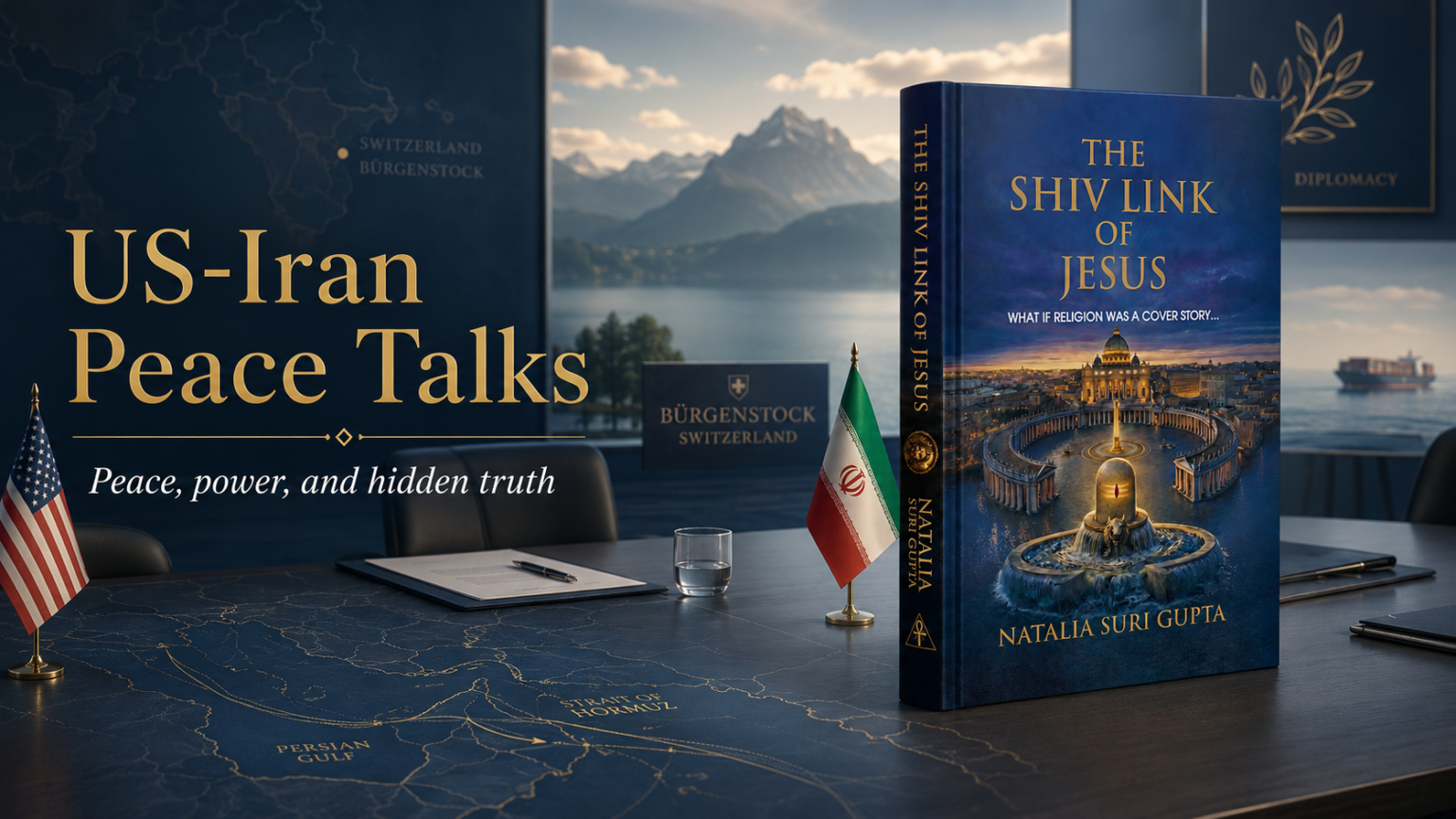
Every major peace talk begins with documents, security convoys, official statements, and guarded smiles. But beneath all that formality, something more fragile is always present: the hope that history can be interrupted.
Introduction
That is why the latest US-Iran peace talks have captured global attention. As of June 22, 2026, high-level negotiations in Switzerland have moved from dramatic uncertainty to cautious progress. The talks at Bürgenstock, facilitated by Switzerland and mediated by Qatar and Pakistan, are focused on implementing a memorandum of understanding between the United States and Iran, with technical talks expected to continue through the week.
The immediate issues are political and strategic: Iran’s nuclear program, sanctions relief, frozen assets, oil exports, the Strait of Hormuz, and violence linked to Lebanon. Yet the emotional weight of this moment is larger than policy. People are searching for “US-Iran peace talks” because they sense that a single diplomatic failure could echo across borders, economies, and generations.
What Is Happening in the US-Iran Peace Talks?
The latest round of talks took place in Switzerland after a memorandum of understanding was signed between the United States and Iran. Switzerland said the signing was “an important step toward de-escalation in the region,” and noted that the US, Iran, Pakistan, and Qatar were expected to meet at Bürgenstock to begin implementation discussions.
Reuters reported that the first round of high-level talks ended on Monday, June 22, with Qatar and Pakistan saying both sides had agreed to a roadmap toward a final deal within 60 days. The discussions also included technical negotiations, a mechanism aimed at ending fighting in Lebanon, and a communication line to help ensure safe passage for commercial shipping through the Strait of Hormuz.
The Associated Press similarly reported that Qatar and Pakistan described “encouraging progress,” while noting that the talks had a rocky start because of public tensions and sharply conflicting messages from the two sides. AP also reported that the interim deal outlines a 60-day period for negotiators to settle issues around Iran’s nuclear program, while frozen Iranian assets remain part of the agenda.
In simple terms, the talks are not yet a final peace agreement. They are a structured attempt to prevent the conflict from widening while giving diplomats 60 days to resolve the most dangerous questions.
Why Are US-Iran Peace Talks Trending Now?
The topic is trending because it sits at the crossroads of war, oil, nuclear fears, and regional instability. Iran’s position near the Strait of Hormuz makes any escalation especially sensitive because the waterway is central to global energy shipments. Reuters reported that talks were shaped by concerns over the Strait, Lebanon, nuclear issues, and the implementation of the memorandum of understanding.
Markets are also reacting. Reuters reported that oil prices resumed their drop after progress in the talks was reported, while gold prices rebounded as investors weighed peace-talk optimism against other economic pressures.
But the cultural reason runs deeper. The world is tired of permanent crisis. Every time two old enemies sit across a table, people wonder whether history is truly fixed—or whether even the oldest wounds can still be reopened, cleaned, and healed.
The Core Issues: Nuclear Power, Sanctions, Hormuz, and Lebanon
The US-Iran peace talks are not about one problem. They are about several overlapping conflicts.
The nuclear issue remains central. Western powers have long feared that Iran could use its nuclear program for military purposes, while Iran has denied that claim and defended its right to enrichment. AP reported that Iran’s president vowed not to back down from uranium enrichment, while negotiators continue trying to define the future of Tehran’s nuclear program.
Sanctions and frozen assets are another major pressure point. Reuters reported that Iran’s foreign minister said his country had secured waivers for oil and petrochemical exports, the release of some frozen assets, and a development plan for Iran.
Then there is Lebanon. The talks are also linked to efforts to reduce fighting involving Israel and Hezbollah. AP reported that the parties agreed to establish a mechanism to help end fighting between Israel and Hezbollah, though neither Israel nor Hezbollah is a direct signatory to the US-Iran deal.
This is why peace is difficult. A treaty may be signed by two governments, but its success depends on many visible and invisible forces.
Why the Strait of Hormuz Matters
The Strait of Hormuz is not just a location on a map. It is one of the world’s most sensitive maritime passages. When it becomes part of a conflict, the consequences can spread quickly into shipping, oil prices, inflation, and global anxiety.
Reuters reported that the parties agreed to open a communication line to help ensure safe passage for commercial ships through the contested strait. The same report noted that US officials disputed Iran’s claim of closure, while shipping data showed a sharp drop in vessel movement on Sunday.
For readers trying to understand the importance of the talks, this is the key: diplomacy here is not abstract. It affects fuel, trade, markets, military risk, and everyday life far beyond the Middle East.
The Hidden Human Story Behind Peace Talks
Most headlines ask: Will the deal hold?
But another question matters: Why do we want it to hold so badly?
Peace talks fascinate us because they dramatize something ancient within the human spirit. We want enemies to speak because silence feels like death. We want negotiations to continue because dialogue is a sign that destruction has not yet won. We want leaders to find a path because, somewhere within us, we still believe history can be redeemed.
This is where the story becomes more than politics. The US and Iran carry decades of mistrust, trauma, ideology, and competing versions of truth. Every side believes it remembers correctly. Every side believes it has suffered. Every side believes the other has hidden something.
Peace begins when power finally agrees to sit beside memory.
A Natural Connection to The Shiv Link of Jesus
Stories like The Shiv Link of Jesus explore a similar tension between belief, history, and the search for what lies beneath accepted narratives. The novel’s world moves through questions of faith, secrecy, identity, and spiritual inheritance, including theories about hidden links between Jesus, India, and sacred knowledge.
That is not the same as a modern geopolitical negotiation, of course. But the emotional pattern is familiar. In both diplomacy and mystery, the surface story is rarely the whole story. Behind official claims are buried fears. Behind conflict are old wounds. Behind every rigid position is a deeper question: What truth are we protecting, and what truth are we afraid to face?
In The Shiv Link of Jesus, the search for truth becomes dangerous because truth threatens established power. In real-world peace talks, truth is also dangerous—not because it belongs to one side, but because peace often requires every side to admit that its story is incomplete.
Key Takeaway
The US-Iran peace talks matter because they are not merely about a 60-day roadmap, nuclear policy, or the Strait of Hormuz. They are about whether old enemies can transform suspicion into structure, and structure into peace.
Deeper Reflection: Peace Is Not the Absence of Mystery
Peace is often described as the absence of war. But perhaps peace is something more demanding. Perhaps peace is the courage to remain in the room when anger rises. It is the discipline to keep speaking when history says silence would be easier. It is the willingness to accept that no nation, religion, or civilization owns the whole truth.
The world is drawn to these talks because the world recognizes itself in them. We are all negotiating with our past. We are all trying to decide what must be defended, what must be released, and what must finally be understood.
A peace agreement may be written in political language, but its deeper grammar is spiritual. It asks whether fear can become trust. Whether pride can become humility. Whether ancient wounds can become wisdom.
Conclusion
The latest US-Iran peace talks offer a fragile but meaningful opening. The roadmap is not a final peace. The technical talks are not a guarantee. The issues—nuclear policy, sanctions, shipping routes, Lebanon, and regional influence—remain complex and volatile.
Yet the fact that dialogue continues matters.
In a world often trapped between suspicion and spectacle, diplomacy reminds us that even the hardest conflicts begin to change when people return to the table. And for readers drawn to mysteries where faith, history, and hidden truth quietly meet, The Shiv Link of Jesus offers another path into that timeless search.
FAQ
What are the US-Iran peace talks about?
They are about implementing a memorandum of understanding, reducing conflict, addressing Iran’s nuclear program, discussing sanctions and frozen assets, keeping the Strait of Hormuz open, and managing regional tensions linked to Lebanon.
Are the US and Iran close to a final peace deal?
Not yet. Reports say the sides agreed to a 60-day roadmap toward a final deal, with technical negotiations continuing in Switzerland.
Who is mediating the talks?
Qatar and Pakistan are playing key mediation roles, while Switzerland is facilitating the setting for the talks at Bürgenstock.
Why is the Strait of Hormuz important?
It is a crucial route for global energy shipments. Any threat to commercial shipping there can affect oil markets, trade, and global economic stability.
How does this topic connect to The Shiv Link of Jesus?
The connection is thematic. Both the peace talks and the novel explore hidden truth, faith under pressure, power, identity, and the difficult journey from conflict toward revelation.