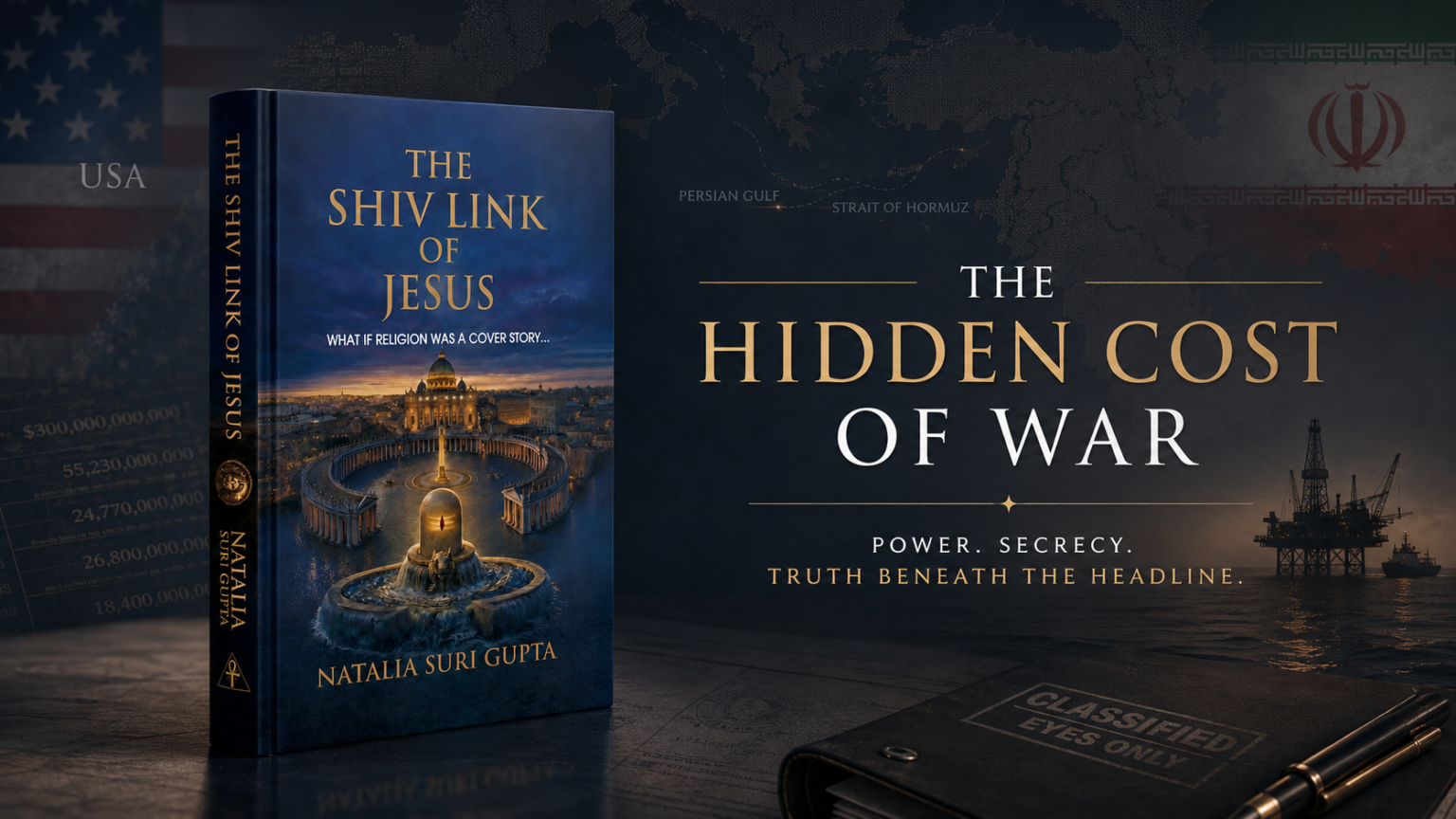
Introduction: Why Everyone Is Talking About the $300 Billion War Cost
A number can become a battlefield before the real facts are even understood.
That is what has happened with the phrase “USA faces massive loss of $300 billion because of war.” Across news platforms and social media, the figure has been repeated with urgency, anger, and confusion. Some people believe the United States is directly paying Iran. Others see it as a symbol of defeat. Still others view it as the unavoidable cost of ending a dangerous conflict.
But the clearest current reporting suggests a more complicated picture. The $300 billion figure is linked to a proposed reconstruction and development fund connected to the US-Iran interim agreement, not a confirmed direct payment by American taxpayers. Reuters reported that the fund is designed as a private investment vehicle, with commitments from companies across regions, and that it is separate from sanctions relief and frozen assets negotiations.
Still, the reason this story is trending is not only financial. It touches something much deeper: the fear that wars never end cleanly. Even when missiles stop, the bills continue. Even when leaders call it victory, people ask what was lost.
What Happened in the US-Iran War Deal?
According to Reuters, the US and Iran agreed on a framework intended to end their war, reopen the Strait of Hormuz, and create a 60-day period for broader negotiations. The agreement is tied to nuclear discussions, sanctions, regional security, and financial incentives.
The most debated part is the proposed $300 billion reconstruction and development fund. Reuters reported that the fund would not become operational unless a final deal is reached and that key details about administration are still being negotiated.
AP also reported that the interim pact started a 60-day negotiating clock and that the $300 billion fund has drawn criticism from Republican leaders and conservative commentators, even as Trump said the United States would not contribute to it.
So the direct answer is: No, current reports do not clearly show that the USA is directly losing or paying $300 billion from taxpayer money. The figure refers to a controversial reconstruction/investment structure connected to the peace framework.
Why the $300 Billion Figure Feels Like a Loss
Numbers in war carry emotion. A billion dollars is not just money. It becomes hospitals, schools, fuel bills, taxes, military lives, political trust, and national pride.
That is why the phrase “USA $300 billion loss because of war” has spread so fast. People are not only asking, “Who is paying?” They are asking:
What did the war achieve?
Was peace bought too late?
Did the conflict weaken America’s position?
Did ordinary citizens pay the hidden price through inflation, oil, and uncertainty?
Reuters noted that critics argue the interim deal gives Iran major benefits while returning the US to conditions it largely had before the conflict: an open Strait of Hormuz and Iran’s stated promise not to develop nuclear weapons.
This is why the story feels bigger than diplomacy. It feels like a moral accounting.
The Oil, Market, and Hormuz Factor
War in the Middle East rarely stays regional. The Strait of Hormuz is one of the world’s most important routes for oil and gas shipments. When conflict threatens that passage, energy prices and shipping confidence can be affected globally.
Reuters reported that IMF chief Kristalina Georgieva expected oil prices to ease after the interim peace deal, but not collapse, because maritime traffic would take time to normalize and countries may rebuild reserves.
That means even if the $300 billion is not a direct American payment, the war may still have carried indirect costs: higher fuel prices, military spending, market anxiety, insurance costs, and political pressure.
War is rarely paid for in one invoice. It arrives through many doors.
The Political Battle Inside America
The $300 billion fund has become a political symbol in Washington. Some lawmakers see it as a dangerous concession. Others argue that ending the war is worth a difficult deal.
AP reported that Senate Armed Services Committee Chairman Roger Wicker criticized the fund even while noting it was not funded by US taxpayers. Trump, meanwhile, called the idea of a US $300 billion payment “fake news” and argued that the deal meant lower oil prices and success for America.
This split reveals a familiar pattern: after every major conflict, nations argue over the meaning of victory. Was peace a sign of wisdom or weakness? Was compromise strategic or shameful? Was the cost financial, moral, or spiritual?
Natural Story Connection: War, Hidden Truth, and The Shiv Link of Jesus
This is where the story quietly echoes the world of The Shiv Link of Jesus.
The novel is not about modern geopolitics, yet it explores a similar human tension: what happens when institutions protect power, when truth is buried, and when individuals are forced to ask whether accepted narratives are complete. The book’s own disclaimer describes it as a work of fiction meant for spiritual reflection and unity, not as a challenge to any faith tradition.
In the story, Davy Christo follows fragments of hidden knowledge, driven by the belief that history may contain truths powerful enough to disturb empires. The book repeatedly circles themes of faith, secrecy, India, the Vatican, and the search for meaning beneath official stories.
That is also why this $300 billion war debate feels so charged. The public does not only want a policy explanation. People want to know what lies beneath the announcement. Who benefits? What was hidden? What was sacrificed? What truth is being framed as victory?
The Deeper Cost of War Is Not Always Money
The most haunting cost of war is often invisible.
Money can be counted. Lives can be memorialized. Treaties can be signed. But mistrust lingers. Families grieve. Nations harden. Faith in leadership fractures. Citizens begin to wonder whether the truth is always revealed only after the damage is done.
That is why this story has captured public attention. The $300 billion number has become a vessel for something larger: the suspicion that modern wars are never only about security. They are also about resources, ideology, image, influence, and the stories governments tell their people.
In spiritual terms, war begins when separation becomes stronger than recognition. When one side stops seeing the other as human, every cost becomes easier to justify.
Key Takeaway
The USA is not clearly confirmed to be directly paying or losing $300 billion because of war. Current reports describe the amount as a proposed Iran reconstruction and development fund tied to the US-Iran interim deal, with Trump denying US taxpayer funding. But the controversy matters because it reveals the deeper truth: war always costs more than leaders first admit.
FAQ
Is the USA paying Iran $300 billion?
Current reports say Trump denies that the US is paying Iran $300 billion. Reuters described the fund as a private investment vehicle, not direct US government aid.
Why is the $300 billion figure trending?
It is trending because the US-Iran interim deal includes discussion of a major reconstruction and development fund, and political critics argue it could reward Iran after war.
Is the US-Iran war over?
Reuters reported that the agreement created a 60-day negotiation period, but implementation remains uncertain and regional tensions continue.
What is the real cost of war?
The real cost includes money, lives, fuel prices, military resources, public trust, diplomacy, and long-term instability.
How does this connect to The Shiv Link of Jesus?
The connection is thematic. Like the debate over war costs, the novel explores hidden truths, faith under pressure, institutional secrecy, and the human search for meaning.
Conclusion: The Truth Beneath the Number
The phrase “USA faces massive loss of $300 billion because of war” may not be fully accurate as a direct financial claim. But it reveals something emotionally true: people sense that war always leaves behind a bill larger than the one printed in headlines.
The $300 billion debate is not only about Iran, America, or reconstruction. It is about the hidden cost of power, the fragility of public trust, and the way truth often emerges only after conflict has already changed the world.
For readers drawn to mysteries where faith, history, power, and hidden truth quietly meet, The Shiv Link of Jesus offers another path into that timeless search.