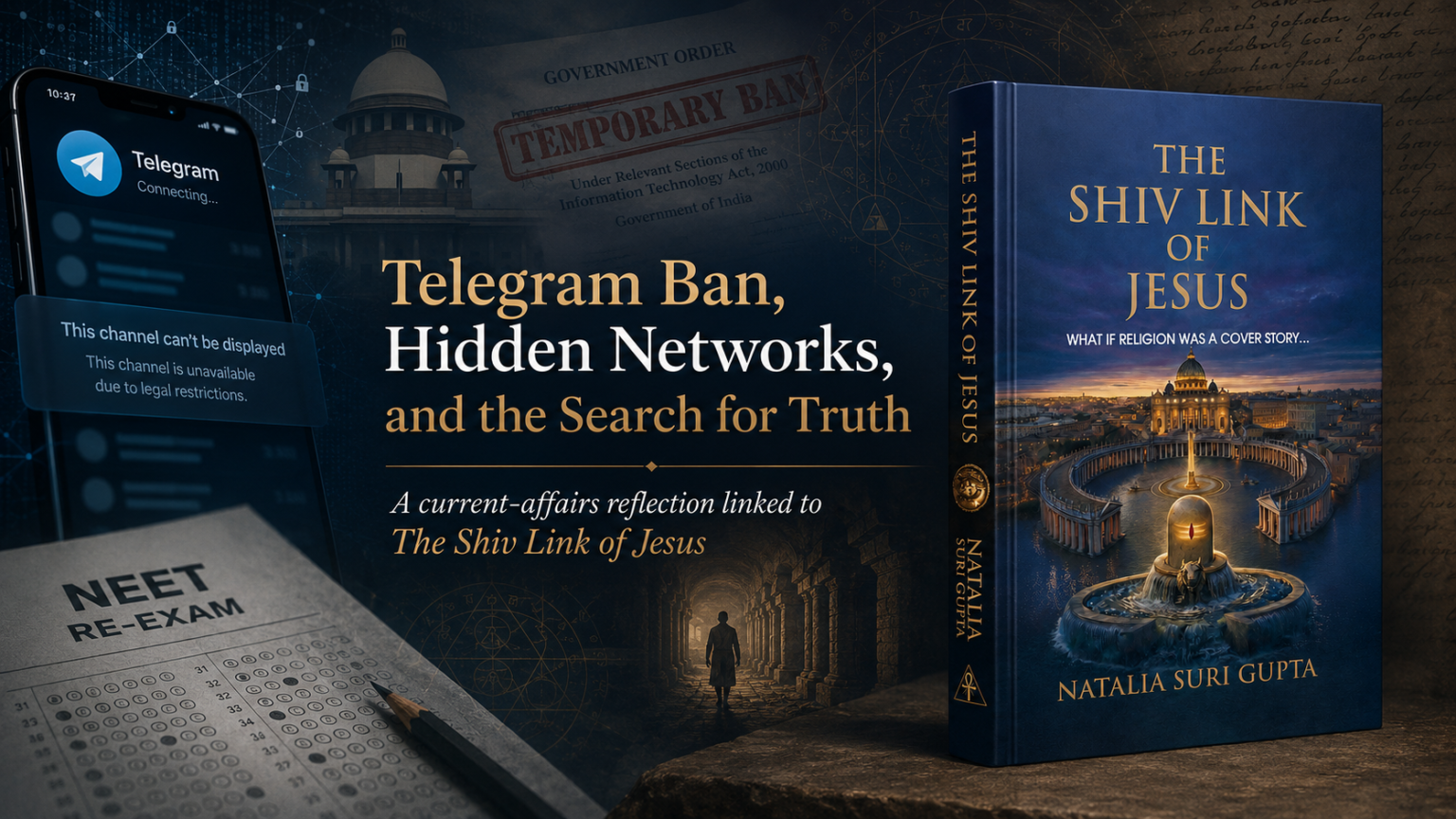
Introduction: Why Everyone Is Talking About the Telegram Ban
The phrase “Telegram ban” has suddenly become more than a tech headline. It has become a mirror held up to modern India’s anxieties: exam pressure, digital fraud, misinformation, government power, student fear, and the fragile boundary between safety and freedom.
India temporarily restricted Telegram ahead of the NEET medical entrance re-exam, citing concerns over channels that allegedly claimed to sell leaked question papers. According to Reuters, the restriction was imposed until June 22, 2026, and affected Telegram’s massive Indian user base of more than 150 million people.
The government argued that even fake claims of leaked papers could defraud students and families. Telegram challenged the decision, saying the move undermined constitutional protections and punished ordinary users, but the Delhi High Court rejected its appeal.
On the surface, this is a story about one app. Beneath the surface, it is about something older and more human: our fear that truth can be hidden, manipulated, sold, or buried inside private channels.
What Is the Telegram Ban?
The Telegram ban in India refers to a temporary government restriction on access to Telegram, imposed ahead of the NEET-UG 2026 re-examination. The National Testing Agency said the move was meant to protect the integrity of the exam after concerns over fake papers, fraud networks, and misuse of Telegram’s message-editing features.
The Economic Times reported that the restriction was issued under Section 69A of the Information Technology Act, 2000, and that Telegram’s message-editing feature for already-posted content was also directed to be disabled in India until June 30, 2026.
In simple terms: the government saw Telegram as a platform being used by fraud networks during a sensitive exam period. Telegram saw the ban as an excessive response that restricted millions of legitimate users.
Why Was Telegram Banned Before NEET?
NEET is not just another exam. For millions of Indian families, it represents years of sacrifice, coaching fees, emotional pressure, and the hope of becoming a doctor. When rumors of paper leaks spread, even false ones, they can create panic.
Reuters reported that the Indian government accused Telegram of not proactively removing accounts offering purported leaked exam papers, while Telegram said it does not permit such activity and had already acted against unlawful content.
The NTA also claimed that some Telegram channels demanded money from students and families by falsely promising access to re-examination papers.
That is why this issue struck a nerve. It was not only about technology. It was about trust in institutions, trust in exams, and trust in the future.
Why Telegram Became the Center of the Debate
Telegram is popular because it offers scale, speed, anonymity, and large public groups. Reuters notes that Telegram groups can hold up to 200,000 members, far beyond WhatsApp’s group limit, and users can interact without exposing phone numbers.
These same features make Telegram powerful for communities, creators, students, activists, and businesses. But they also make it attractive to scammers, piracy networks, misinformation channels, and fraud groups.
This is the paradox of the digital age: the very tools that help truth travel faster can also help deception travel deeper.
The Bigger Question: Safety or Digital Freedom?
The Telegram ban raises a difficult question: should a government block an entire platform to stop misuse by a few?
Supporters of the ban argue that extraordinary situations need extraordinary measures, especially when millions of students could be harmed by fraud. Critics argue that blocking an app used by more than 150 million people is disproportionate and risks normalizing broad digital restrictions.
This tension is not new. Governments around the world have scrutinized Telegram over privacy, security, misinformation, political activism, and illegal content. Moneycontrol reported that several countries have imposed bans, temporary blocks, or restrictions on Telegram in different forms.
The debate is no longer just technological. It is philosophical: how much freedom should a society risk for safety, and how much control should it accept in the name of order?
Key Takeaway
The Telegram ban is not only about an app being blocked. It is about the modern struggle between truth and manipulation, privacy and accountability, freedom and fear. It shows how digital platforms have become the new hidden corridors where power, rumor, faith, crime, and belief move silently.
A Natural Story Connection: Hidden Networks and the Search for Truth
This is where the conversation begins to feel strangely familiar to the world of “The Shiv Link of Jesus.” The novel opens with a mystery involving hidden truths, religious power, identity, and a dangerous search across India. Its fictional premise asks what happens when official narratives are questioned and buried knowledge begins to surface. The book frames itself as a work of fiction intended to promote spiritual reflection and unity, not to assert religious fact.
Stories like “The Shiv Link of Jesus” explore the same emotional tension that makes the Telegram ban so compelling: the fear that truth may be hidden in systems too large for ordinary people to understand.
In the Telegram controversy, the hidden world is digital: private channels, edited posts, anonymous groups, invisible fraud networks. In spiritual mystery fiction, the hidden world may be ancient: lost symbols, buried manuscripts, sacred clues, and forbidden questions.
Different worlds. Same human hunger.
We want to know what lies beneath the surface.
Why This Story Feels So Powerful Right Now
People are drawn to the Telegram ban story because it touches three deep fears.
First, the fear of unfairness. Students preparing for NEET already carry enormous emotional weight. The idea that someone could buy access, fake a leak, or manipulate panic feels like a betrayal.
Second, the fear of surveillance and control. Many users depend on Telegram for communities, education, business, and communication. A platform-level restriction makes people wonder where the line between safety and censorship should be drawn.
Third, the fear of invisible power. The most unsettling part of digital life is that we rarely see the full network. We see only fragments: a forwarded message, a viral screenshot, a private group name, a claim that may or may not be true.
That is why this news feels almost like a mystery story. There is a public version, a legal version, a technological version, and a hidden version moving beneath them all.
The Spiritual Dimension of Digital Truth
In older times, seekers went to temples, monasteries, libraries, deserts, caves, and sacred cities to find truth. Today, many people search through screens.
The medium has changed. The hunger has not.
A Telegram channel can become a classroom, a rumor mill, a marketplace, a prayer group, a protest space, or a trap. Like any powerful tool, it reflects the intention of the person using it.
This is why the Telegram ban debate matters beyond policy. It reminds us that truth is not protected by technology alone. It is protected by conscience, verification, responsibility, and courage.
FAQ
Is Telegram banned in India right now?
Yes, according to current reports, Telegram was temporarily restricted in India until June 22, 2026, ahead of the NEET-UG re-examination.
Why did India ban Telegram?
The government cited concerns over alleged exam-related fraud, fake NEET paper leak claims, and Telegram channels that reportedly targeted students and families.
Did Telegram challenge the ban?
Yes. Telegram challenged the restriction in the Delhi High Court, but the court rejected its appeal and said the government had followed legal procedure.
Is the Telegram ban permanent?
Current reports describe it as temporary and linked to the NEET re-exam period, not a permanent nationwide ban.
Why is Telegram often controversial?
Telegram’s large groups, public channels, anonymity features, and rapid sharing tools make it useful for communities but also vulnerable to misuse by fraud, misinformation, piracy, and illegal networks.
Conclusion: The Ban, the App, and the Unseen World Beneath
The Telegram ban is a current event, but its deeper meaning is timeless. Societies have always struggled with hidden knowledge, secret networks, institutional power, and the question of who gets to control truth.
Today, the battlefield is digital. Tomorrow, it may be something else.
But the human search remains the same: to separate truth from deception, fear from wisdom, and control from protection.
For readers drawn to mysteries where faith, history, technology, and hidden truth quietly meet, “The Shiv Link of Jesus” offers another path into that timeless search.